
Family well-being is built through everyday choices that support physical health, emotional stability, meaningful relationships, and a sense of security. While no household can avoid every difficult situation, families can develop routines and support systems that make challenges easier to manage.
A strong foundation can include staying active together, creating recreation opportunities, planning meaningful experiences, and knowing where to turn when serious problems arise. It can also involve recognizing when a family member needs professional support and learning how to respond without judgment. The goal is not to create a perfect household, but to build an environment where family members feel supported and prepared to handle life’s changes.
Build Consistent Routines That Support Physical Wellness

Regular physical activity can benefit the entire household, but maintaining an exercise routine can be difficult when everyone has different schedules and interests. Rather than trying to create one rigid routine, families can look for activities that fit individual needs while encouraging everyone to stay active.
Parents can help make movement part of normal family life by scheduling activities at predictable times. This might include walking together, participating in recreational activities, or setting aside time for individual workouts.
Consider these strategies:
- Choose realistic activities for each family member
- Schedule exercise around existing responsibilities
- Make physical activity enjoyable rather than competitive
- Allow time for rest and recovery
- Encourage gradual progress
For adults interested in structured exercise, a local Pilates studio can provide an organized setting for building strength, flexibility, and body awareness. Family members can support one another’s goals while recognizing that everyone may prefer different forms of exercise.
The most sustainable routines are those that feel manageable. When physical activity becomes a normal part of family life instead of an occasional obligation, maintaining it may become easier over time.
Encourage Activities That Build Confidence and Discipline
Activities that challenge both the body and mind can provide valuable opportunities for personal growth. Children and adults can develop confidence by learning unfamiliar skills, working through mistakes, and seeing their abilities improve with practice.
Parents can support this process by focusing on effort rather than immediate results. A child who struggles with a new activity may need encouragement to continue, but they should also have a voice in deciding which activities they genuinely enjoy.
Helpful approaches include:
- Set achievable goals
- Recognize improvement
- Encourage consistent practice
- Teach respect for instructors and participants
- Avoid comparing siblings or family members
For example, jiu jitsu lessons can combine physical activity with lessons in discipline, problem-solving, self-control, and respect. Beginners can gradually develop skills while learning how to respond to challenges.
Families should also remember that confidence develops differently for everyone. Some children may thrive in competitive settings, while others may prefer individual activities. Giving family members room to discover their interests can make extracurricular activities more rewarding and sustainable.
Create Opportunities for Safe Outdoor Experiences
Outdoor activities can give families opportunities to exercise, learn new skills, and spend time away from screens and household distractions. They can also help children develop independence as they become more comfortable navigating new environments.
Safety should remain the priority whenever families introduce children to unfamiliar activities. Parents should select instruction and equipment appropriate for the child’s age and experience level.
Before participating, families can:
- Review basic safety rules
- Use appropriate protective equipment
- Choose qualified instruction
- Discuss how to respond to unexpected situations
- Allow beginners to progress gradually
Horse riding lessons, for instance, can introduce children to an activity that combines physical coordination with responsibility and interaction with animals. Qualified instruction can help beginners learn appropriate techniques while becoming familiar with safe practices around horses.
Parents should also pay attention to whether an activity remains enjoyable. Encouraging children to try something new can be valuable, but forcing them to continue an activity they strongly dislike may create unnecessary stress. Outdoor recreation works best when it provides opportunities for learning, movement, and positive family experiences.
Prepare Families for Difficult Legal Circumstances

Unexpected legal problems can affect an entire household, particularly when a family member is accused of a crime. Stress, uncertainty, financial concerns, and changes to normal routines can make these circumstances difficult for both adults and children.
Families can respond more effectively by gathering reliable information instead of relying on assumptions or conversations on social media. Adults should also avoid discussing sensitive legal details in ways that could unnecessarily frighten children.
Practical steps include:
- Keep important contact information accessible
- Write down questions for legal professionals
- Organize relevant documents
- Maintain normal household routines when possible
- Give children age-appropriate reassurance
When a family member faces drug-related allegations, a drug defense law firm may be able to explain the legal process and available options. Families should allow qualified legal professionals to address case-specific questions rather than attempting to determine outcomes themselves.
It can also help to designate one or two adults to coordinate information. This reduces confusion when multiple family members are trying to understand what is happening. Maintaining communication and predictable routines can provide some stability while the family addresses the situation.
Understand What to Do When Immediate Legal Support Is Needed
An arrest or detention can happen unexpectedly, leaving family members unsure about what steps to take. Having a basic understanding of the process can help adults remain organized and avoid making rushed decisions based on incomplete information.
Families can prepare by keeping essential information in an accessible location. This might include contact information for legal professionals and important personal details that may be needed during an emergency.
When someone is detained, families should:
- Confirm where the person is being held
- Gather accurate information about the situation
- Ask appropriate legal questions
- Avoid making assumptions about the outcome
- Keep communication organized
A bail bonding service may assist with the financial and procedural aspects of posting bail when bail has been set and release is available. The specific requirements and options can vary based on the circumstances and jurisdiction.
Family members should also remember that emotional reactions are normal. Staying calm, documenting information, and relying on qualified professionals can make it easier to navigate an unfamiliar process without adding unnecessary confusion.
Make Shared Experiences Part of Family Life
Strong family relationships require time together, but busy schedules can make meaningful interaction difficult. Families do not necessarily need elaborate activities to stay connected. Regular meals, outings, hobbies, and planned experiences can create opportunities for conversation and shared memories.
The most useful activities are those that allow family members to participate rather than simply being in the same location. Parents can ask children about their interests and involve them in choosing activities.
Families can:
- Establish recurring traditions
- Plan outings around shared interests
- Schedule device-free time
- Let children participate in decisions
- Leave room for spontaneous activities
Travel planning can make family trips easier by addressing transportation, accommodations, activities, budgets, and individual needs before departure. However, plans should leave room for flexibility because children may become tired or plans may change.
Travel can also teach children useful skills, including adapting to unfamiliar environments and considering other people’s needs. Even shorter local trips can provide a break from normal routines.
The objective is not to fill every weekend with activities. A smaller number of meaningful experiences may provide more opportunities for genuine connection than an overloaded schedule.
Recognize When Substance Use Requires Serious Support

Substance use can affect physical health, relationships, school, work, finances, and emotional well-being. Families may struggle to determine when a problem has progressed beyond what they can reasonably address without professional assistance.
Warning signs can vary, but changes in daily functioning or repeated problems related to substance use deserve attention. Families should approach these situations with concern rather than shame.
Potential signs include:
- Significant changes in behavior
- Withdrawal from family activities
- Problems at school or work
- Increased secrecy
- Changes in relationships
- Repeated unsuccessful attempts to stop using substances
When methamphetamine use becomes a serious concern, a meth addiction treatment program may provide specialized support. Treatment can address substance use while also helping individuals develop strategies for managing triggers and rebuilding daily routines.
Family members can encourage professional evaluation without attempting to diagnose the person themselves. They can also establish reasonable boundaries around behavior that affects the household.
Most importantly, families should remember that addiction is a complex issue. Compassion and accountability can exist together, allowing family members to provide support while protecting their own well-being.
Match Treatment Support to Individual Needs
There is no single treatment approach that works for every person experiencing a substance use disorder. The appropriate level of care can depend on the substance involved, severity of use, physical and emotional needs, living situation, and available support.
Professional assessment can help determine whether someone may benefit from intensive supervision or a less restrictive form of treatment. Families should avoid choosing a level of care based solely on what seems most convenient.
Factors to consider include:
- Medical and behavioral health needs
- Safety concerns
- Home environment
- Previous treatment experiences
- Family support
- Ability to participate consistently
Residential inpatient treatment provides a structured setting where individuals can receive ongoing support while temporarily stepping away from environments that may contribute to substance use. This level of care may be appropriate for some people, but treatment decisions should be made with qualified professionals.
Families can also ask how relatives may participate in the recovery process. Appropriate involvement can help improve communication and provide support, while respecting the individual’s privacy and independence.
Understanding the reasoning behind a treatment recommendation can help families approach recovery with realistic expectations.
Maintain Recovery Support During Daily Life
Returning home after an intensive period of treatment can introduce new challenges. Everyday responsibilities, relationships, stressful situations, and familiar environments can create triggers that were easier to avoid in a structured setting.
Families can help by creating a predictable environment while allowing the person in recovery to take responsibility for their own progress. Support should not mean monitoring every action or attempting to control the entire recovery process.
Helpful forms of support include:
- Encouraging continued counseling
- Maintaining consistent household routines
- Discussing potential triggers
- Supporting healthy activities
- Establishing reasonable household boundaries
- Recognizing progress
IOP programs can provide structured treatment while allowing participants to continue living at home and handling certain everyday responsibilities. This type of support may be useful during a transition between more intensive treatment and independent recovery.
Family members should also recognize that recovery can involve setbacks. A difficult day does not necessarily erase previous progress, but concerning changes should be taken seriously.
Open communication can make it easier to identify problems early and encourage appropriate support without turning the household into a constant source of pressure.
Strengthen Family Connection Through Community Activities
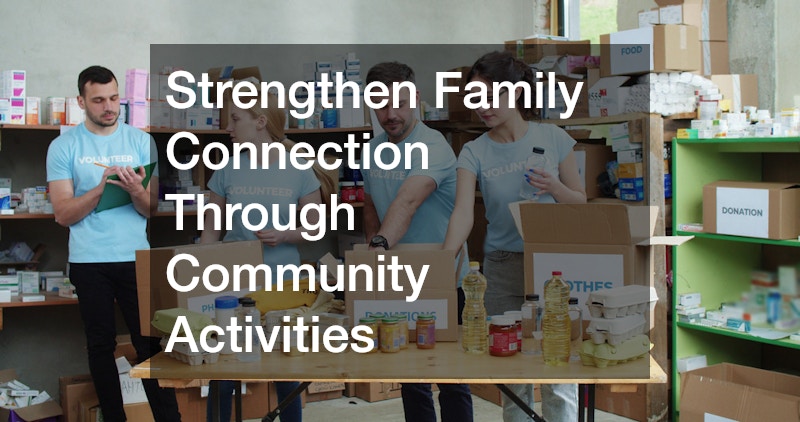
Families can strengthen their sense of connection by participating in activities that extend beyond the household. Community involvement can introduce children and adults to new people, shared interests, and opportunities to contribute.
The most meaningful community activities are those that reflect the family’s interests and values. Families might volunteer, participate in recreational groups, attend educational events, or become involved with community organizations.
To make participation sustainable:
- Choose activities that fit the family’s schedule
- Give children age-appropriate responsibilities
- Encourage participation without overcommitting
- Create recurring traditions
- Talk about experiences afterward
For families involved with a church, a church audio video system can support gatherings, educational programs, presentations, and other shared activities. Participation in community events can provide opportunities for families to spend meaningful time together while developing connections outside the home.
Community involvement should complement, rather than overwhelm, family life. Choosing a few activities that genuinely interest household members can be more beneficial than filling every available evening.
A strong support network can give families additional sources of encouragement and connection during both ordinary periods and difficult transitions.
A stronger foundation for family well-being develops through everyday habits, meaningful relationships, and access to appropriate support. Physical activity, recreation, shared experiences, community involvement, and healthy communication can all contribute to a household where family members feel connected and supported.
Families can also prepare for difficult circumstances by knowing when professional guidance may be appropriate and maintaining routines that provide stability. No family can anticipate every challenge, but creating supportive habits and open communication can make it easier to respond when circumstances change. The goal is not perfection. It is building a household where family members have the encouragement, structure, and resources they need to move forward together.