Homeownership brings immense pride, yet persistent plumbing issues can quickly transform a comfortable residence into a source of ongoing stress. When water drains slowly week after week, water pressure drops unexpectedly, or mysterious smells linger around your property, temporary quick fixes are no longer sufficient. These ongoing breakdowns are clear signals that your home’s underlying infrastructure requires structural attention rather than cosmetic remedies. Addressing these deeply rooted system failures demands a comprehensive, strategic approach to maintenance and structural repair.
Persistent trouble within a piping network rarely occurs in isolation. It is typically the result of hidden corrosion, severe mineral accumulation, or aging structural components working past their intended lifespan. By understanding the mechanical causes of recurring residential drainage and supply problems, property owners can transition from reactive emergency interventions to proactive, long-term operational strategies. This comprehensive guide explores actionable diagnostic solutions and restoration practices designed to resolve complex, recurring plumbing failures once and for all.
Understanding the Culprits Behind Chronic Drainage Failures
Chronic drainage problems are among the most frustrating issues a property owner can face. When multiple fixtures back up simultaneously or drains clear briefly only to clog again days later, the issue resides far deeper than the localized P-trap beneath a single sink.
Investigating Deep-Line Grease and Debris Accumulation
Over years of daily domestic activity, organic fats, petroleum-based soaps, cooked oils, and hair bind together along the interior walls of your wastewater pipes. This soft sludge gradually calcifies, narrowing the interior diameter of the pipe and trapping incoming debris. Traditional home augers or Chemical clearing solutions frequently punch a small temporary hole through the center of the obstruction without removing the surrounding hardened buildup. Consequently, normal daily water usage rapidly fills the newly opened gap, causing the drain to fail repeatedly. Resolving this chronic issue requires drain cleaning scrub-clearing techniques that restore the full internal circumference of your drainage pipes.
Addressing Infiltrating Tree Roots and Structural Pipe Collapses
Landscaping adds tremendous aesthetic value to a residential yard, but mature tree root systems naturally seek out moisture and nutrients buried underground. Older piping materials, such as clay, cast iron, or compromised plastic, feature micro-cracks or unsealed joints through which microscopic root tendrils can enter. Once inside the line, these roots thrive on the constant nutrient flow, expanding into thick mass networks that catch solids and completely sever wastewater flow. Over time, root pressure or ground shifting can cause sections of the line to collapse entirely. Identifying structural shifts via line-camera inspections is critical to preventing repeated raw sewage backups into lower-level living spaces.
Tackling Inadequate Line Venting and Slope Misalignments
Efficient drainage relies heavily on two physical forces: gravity and atmospheric pressure. When wastewater lines are installed with improper slope—either too flat or excessively steep—liquids can separate from solid waste, leaving heavy organic material sitting behind in the line to form chronic obstructions. Furthermore, plumbing air vents running through your roof allow air to enter the drainage system, equalizing pressure so water glides smoothly downstream. If vent pipes become blocked by leaves, bird nests, or debris, a vacuum seal forms inside the pipes. This vacuum slows wastewater down, causes audible gurgling sounds from fixtures, and repeatedly pulls protective water seals out of floor traps.
Strategic Solutions for Main Sewer and Wastewater Lines

When persistent drainage problems affect an entire building, the primary focus must pivot to the main sewer lateral—the large pipe connecting internal drains to a municipal network or private waste treatment area.
Clearing Heavy Scale and Blockages with High-Pressure Washing
When standard snaking fails to provide lasting relief against stubborn, recurring main-line blockages, advanced clearing methods become necessary. Utilizing specialized equipment that blasts water at multi-thousand PSI pressure levels allows technicians to scour the inner walls of structural piping. This intensive scrubbing process completely strips away decades of accumulated grease, hardened scale deposits, tree roots, and impacted debris without damaging the integrity of sound pipes. Applying targeted hydro jetting restores original flow capacities, eliminating the hidden caught material that leads to persistent main-line backups.
Replacing Degraded Infrastructure Through Trenchless Pipe Rehabilitation
For underground sewer pipes that have suffered severe cracking, root intrusion, or extensive corrosion, traditional replacement once required destroying lawns, driveways, and concrete foundations. Modern trenchless rehabilitation techniques have revolutionized structural repair. Methods like cured-in-place pipe (CIPP) lining involve inserting a resin-saturated flexible liner directly into the old, damaged pipe. Once inverted and cured using hot water or steam, this resin hardens into a seamless, joint-free structural shell inside the host pipe. This process resolves recurring leaks and structural weaknesses while leaving your surface landscape completely undisturbed.
Partnering with Certified Infrastructure Professionals for System Upgrades
Managing complex underground lateral lines or retrofitting outdated cast-iron systems requires advanced engineering knowledge, industrial tools, and adherence to municipal building codes. Attempting high-level main-line repairs without adequate training often leads to structural collapse or severe water damage. Engaging licensed plumbing contractors ensures that system diagnostics are executed accurately using modern fiber-optic video cameras. These certified experts possess the heavy machinery and technical expertise needed to re-engineer flawed drain slopes, replace collapsed mains, and execute code-compliant sewer connections that permanently eliminate chronic residential drain failures.
Resolving Water Heating and Domestic Pressure Fluctuation

Inconsistent water temperatures, sudden loss of pressure, or unexpected thermal surges represent severe disruptions to daily home comfort. These persistent issues often point toward internal tank mechanical failures or hidden system pressure imbalances.
Eliminating Mineral Sediment Deposits Inside Heating Tanks
Homes situated in regions with high mineral concentrations in the public water supply often suffer from rapid scale accumulation inside hot water tanks. As municipal water is heated, dissolved calcium and magnesium minerals precipitate out of solution, settling to the bottom of the vessel as a dense, sand-like sludge. This heavy sediment layer acts as a thermal barrier between the gas burner or heating element and the stored water. The resulting thermal insulation causes noisy popping sounds, lowers overall heating efficiency, and prematurely corrodes the internal steel wall. Implementing scheduled water heater maintenance—including annual tank flushes and sacrificing worn anode rods—ensures optimal heat transfer and prevents premature tank failure.
Installing Pressure Regulating Valves to Shield Plumbing Fixtures
Excessively high municipal incoming water pressure may feel luxurious during a shower, but it inflicts severe, continuous physical stress on your entire domestic pipe network. Water pressure consistently reading above eighty pounds per square inch causes hidden internal stress, leading to noisy water hammer shocks, failing appliance valves, and recurring pinhole leaks along copper lines. Installing a dedicated brass pressure-reducing valve (PRV) directly where the main supply line enters your home dampens extreme line surges. Regulating this incoming pressure to a safe baseline protects fragile appliance valves and eliminates the persistent drip issues caused by high pressure.
Modernizing Old Galvanized Iron and Corroded Supply Lines
Homes constructed mid-twentieth century frequently feature galvanized iron supply lines. Over decades of exposure to oxygen and mineral-rich water, the interior walls of galvanized pipes form thick, rust-based nodules. This internal corrosion gradually chokes off water flow, resulting in severely restricted volume across upper-floor fixtures. Furthermore, as rust flakes peel off, they repeatedly jam delicate aerators, showerheads, and internal valve cartridges throughout the house. When supply line decay reaches this advanced stage, performing a localized pipe repair is merely a temporary patch. Complete repiping using modern flexible PEX or durable copper materials permanently restores volume and eliminates discolored water.
Restoring On-Site Wastewater Systems and Private Water Wells
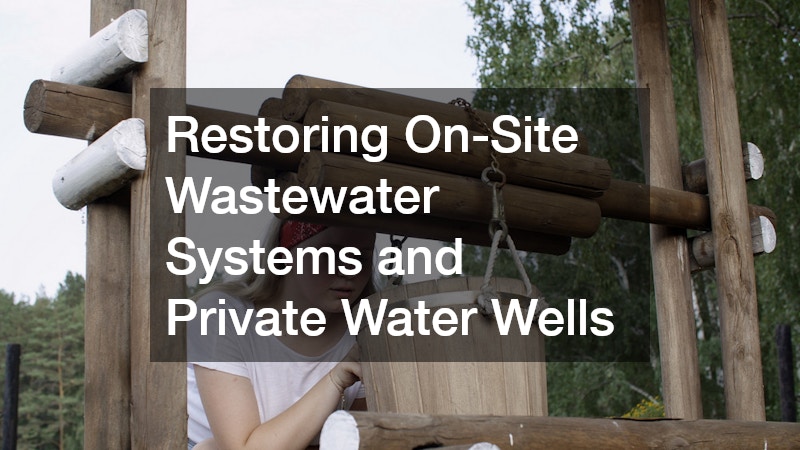
Properties located outside dense urban centers rely on independent, self-contained utilities for clean supply and wastewater management. When these specialized systems experience chronic failures, specialized diagnostic methods must be applied.
Managing Heavy Tank Loads and Protecting Absorption Fields
Residential septic systems rely on delicate biological processes to break down household human waste and clarify liquid effluent before it enters the surrounding soil. Persistent issues like foul yard odors, squishy green grass over the leach field, or slow-draining toilets often indicate structural overloading or drain field soil clogging. When non-biodegradable solids or excessive wastewater volumes bypass the main holding vessel, they coat the absorption trench soil, blocking natural water filtration. Executing targeted septic repair operations—such as replacing cracked distribution boxes, installing protective effluent filters, or resting saturated leach field trenches—restores ecological balance and prevents costly subterranean wastewater backups.
Maintaining Submersible Pumps and Pressure Storage Tanks
For properties drawing water from underground aquifers, persistent pressure drops or sputtering air bursts at domestic faucets usually stem from deep-well mechanical failures. Private supply setups rely on a subterranean pump working in tandem with a heavy-duty pressure tank to maintain consistent household flow. When pressure tank bladders rupture or electrical control switches wear out, the pump experiences rapid cycling, repeatedly switching on and off every time a fixture opens. This constant mechanical friction leads to sudden motor burnout and intermittent water outages. Scheduling professional water well pump service allows technicians to check bladder pre-charge levels, clean electrical contact points, and replace worn pump components before total system failure leaves a household without running water.
Tapping Fresh Aquifers with Modern Subterranean Drilling
Over extended timeframes, private water wells can experience severe yield decline caused by shifting water tables, mineral encrustation along casing screens, or localized aquifer depletion. If an existing well consistently runs dry during peak summer months or draws up heavy sand and silt, mechanical repairs to the surface pump will not fix the underlying water shortage. In these complex scenarios, investing in professional well drilling services allows property owners to sink a deeper, properly cased well into richer hydrogeological zones. Constructing a modern, deep-water well guarantees a clean, continuous water supply that completely eliminates chronic domestic water shortages.
Preserving Fixture Health and Enhancing Overall Water Quality
The baseline chemical composition of the water moving through your home has a direct, continuous impact on the physical lifespan of your entire piping network. Addressing chemical aggressively prevents persistent component failures.
Eliminating Mineral Scale with Advanced Conditioning Systems
Hard water contains significant quantities of dissolved minerals that gradually form hard, chalky scale inside pipes, showerheads, and appliance valves. This stubborn scale restricts fluid motion, destroys rubber seals within ceramic cartridges, and reduces the operating efficiency of heating appliances. Installing whole-house ion-exchange softeners or catalytic scale conditioners neutralizes these harsh minerals before they enter your home’s distribution manifold. Treating the water at the point of entry prevents scale buildup, significantly extending the functional lifespan of all connected appliances and plumbing fixtures.
Removing Aggressive Contaminants and Suspended Sediment
In regions with acidic water tables or high municipal chemical treatment levels, water flowing through domestic copper or brass pipes can cause rapid localized corrosion. Low pH levels physically eat away at internal metal pipe walls, causing microscopic pinhole leaks that lead to severe, hidden wall cavity damage. Furthermore, fine sediment floating in unfiltered well water acts as an abrasive, grinding down valve seats and destroying washer seals. Securing high-grade water filtration installation services strips out aggressive dissolved solids, balances pH levels, and removes abrasive particulates. Purifying water entering your network preserves metallic pipe walls and stops recurring fixture leaks at their source.
Enlisting Professional Municipal Expertise for Main-Line Upgrades
While indoor fixtures fall under private home ownership, chronic drainage issues can sometimes stem from overburdened municipal sewer trunks or sudden pressure surges within city mains. When localized residential repairs fail to resolve systemic drainage issues, engaging local sewer services becomes necessary to evaluate public infrastructure connections. Certified municipal utility technicians use specialized diagnostic cameras to inspect city tap connections, verify main sewer line depths, and clear public lateral blockages. Establishing whether a persistent drainage failure originates on private property or within city-maintained lines prevents unnecessary individual expenditure and ensures targeted structural repairs.
Proactive Strategies to Prevent Recurring Plumbing Failures
Permanently resolving chronic plumbing issues requires shifting from emergency repairs to an ongoing, proactive maintenance routine. Implementing preventive habits and regular system checks protects your home’s infrastructure for years to come.
Implementing Camera Diagnostic Audits and Video Inspections
Modern plumbing technology offers powerful non-destructive diagnostic capabilities. Fiber-optic video camera lines can be routed through cleanout access points to navigate the full length of your drainage network. These cameras broadcast high-definition video feeds to a surface monitor, allowing technicians to inspect interior pipe walls, pinpoint exact crack locations, measure root intrusion depths, and identify subtle slope sagging. Conducting regular digital pipe audits every couple of years catches minor structural defects long before they manifest as catastrophic sewer backups or severe structural collapses.
Adopting Smart Strainers, Drain Maintenance, and Usage Habits
Daily household waste management habits directly dictate the operational health of internal drainage systems. Preventing persistent line blockages starts with strictly controlling what enters your waste pipes. Grease, cooking oils, coffee grounds, and fibrous food scarps should never be poured into kitchen sinks, even when using heavy garbage disposals. In bathrooms, fine mesh strainers should be installed over shower drains to capture loose hair and soap sludge before it combines into dense pipe blockages. Furthermore, non-flushable wipes, paper towels, and sanitary products must never be flushed, regardless of packaging claims, as they fail to break down and rapidly catch on pipe joints.
Setting Up Routine Preventive Maintenance Plans
The most effective protection against persistent plumbing failures is establishing a routine maintenance schedule with a qualified, licensed plumber. Annual professional inspections should cover testing home water pressure, flushing hot water storage tanks, testing backflow prevention valves, inspecting exposed pipe connections for corrosion, and checking sump pump floats. Catching subtle mechanical wear early allows homeowners to perform minor component replacements before small issues turn into extensive structural failures.
Overcoming Persistent Plumbing Challenges
Persistent plumbing issues do not have to remain a permanent burden on your home or peace of mind. By moving beyond temporary surface fixes and looking deeper into your home’s mechanical systems, you can address the true root causes of recurring drainage delays, pressure drops, and component failures. Whether the solution involves scouring line walls, repairing deep underground infrastructure, or treating incoming water quality, taking comprehensive action permanently restores your domestic utilities.
Partnering with certified experts, investing in modern trenchless technologies, and maintaining dedicated preventive habits turns fragile, failure-prone plumbing into a reliable system. Protecting your property’s structural framework today ensures clean water flow, efficient waste removal, and long-term peace of mind for the future.